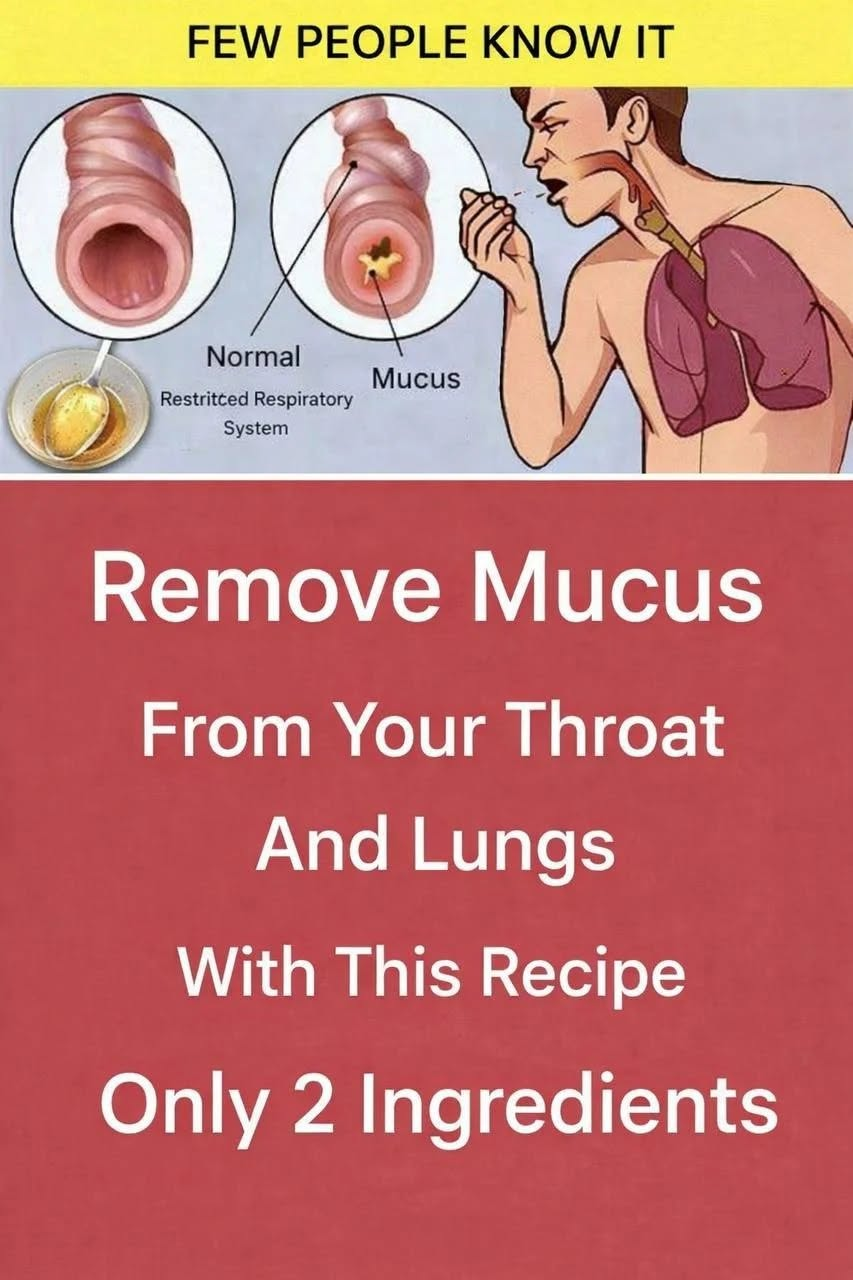
One traditional combination that many people use when experiencing throat irritation is honey and lemon.
These two ingredients are easy to find and can be combined into a warm drink.
Although this mixture does not cleanse the lungs or eliminate mucus from the respiratory system, it may help soothe an irritated throat and make coughing more comfortable.
Ingredients
1 tablespoon of honey.
1 to 2 teaspoons of fresh lemon juice.
1 cup of warm water.
Preparation
Pour warm water into a cup.
Add the honey.
Add the fresh lemon juice.
Stir until the ingredients are thoroughly combined.
Allow the drink to cool to a comfortable temperature.
How to Enjoy It
Sip the drink slowly when your throat feels irritated.
Some people prefer drinking it in the evening because the warmth and honey can make a dry, irritated throat feel more comfortable.
Honey has been studied for its potential to relieve acute cough symptoms, particularly in children older than one year.
Lemon adds flavor and provides vitamin C, although it is not a proven treatment for respiratory infections.
Important: Never give honey to babies younger than 12 months because of the risk of infant botulism. People with diabetes should also consider the sugar content of honey.
4. Why Honey May Help Calm an Irritated Throat
Honey is one of the most popular traditional ingredients used for cough relief.
Its thick consistency allows it to coat the throat temporarily, which may help reduce the sensation of irritation.
Some research suggests that honey can provide modest relief from acute cough symptoms associated with upper respiratory infections.
This does not mean honey kills every virus or removes mucus from the lungs.
Its potential benefit is mainly related to soothing the throat and reducing coughing discomfort.
If you have a persistent cough, honey should not replace medical evaluation or prescribed treatment.
5. Can Lemon Help With Respiratory Congestion?
Lemon is frequently included in traditional drinks for colds and sore throats.
It contains vitamin C, an essential nutrient that supports normal immune system function.
However, drinking lemon water does not immediately eliminate mucus or cure a cold.
Vitamin C is important for overall health, but taking large amounts after symptoms begin does not reliably shorten every respiratory infection.
Another consideration is acidity.
People who experience acid reflux may find that lemon aggravates their symptoms, particularly when consumed shortly before lying down.
If lemon causes discomfort, simply leave it out.
Warm water alone may be sufficient to soothe an irritated throat.
6. Drink Enough Water to Help Keep Mucus From Becoming Too Thick
One of the simplest ways to support respiratory comfort is to maintain adequate hydration.
When you are dehydrated, secretions can become thicker and harder to clear.
Drinking enough fluids helps maintain normal hydration and may make mucus easier to manage.
You can choose from several options:
Plain water.
Warm water.
Clear soups.
Caffeine-free herbal drinks.
Warm lemon water.
Other nonalcoholic beverages.
There is no need to force yourself to drink excessive amounts.
Simply maintain regular fluid intake throughout the day.
People with medical conditions requiring fluid restrictions should follow their healthcare professional’s recommendations.
7. Try Warm Showers to Relieve Nasal Congestion
A warm shower may temporarily make breathing feel more comfortable when your nose is congested.
The warmth and humidity can help relieve the sensation of dryness in the nasal passages.
However, it is important to understand that steam does not remove mucus from the lungs or cure respiratory infections.
If you find warm showers helpful, keep the water temperature comfortable.
Avoid placing your face over bowls of boiling water. This popular home remedy can cause serious burns, particularly in children.
A clean humidifier may also help if the air inside your home is particularly dry.
Follow the manufacturer’s cleaning instructions to prevent the growth of mold and bacteria.
8. Saline Nasal Rinses May Help With Postnasal Drip