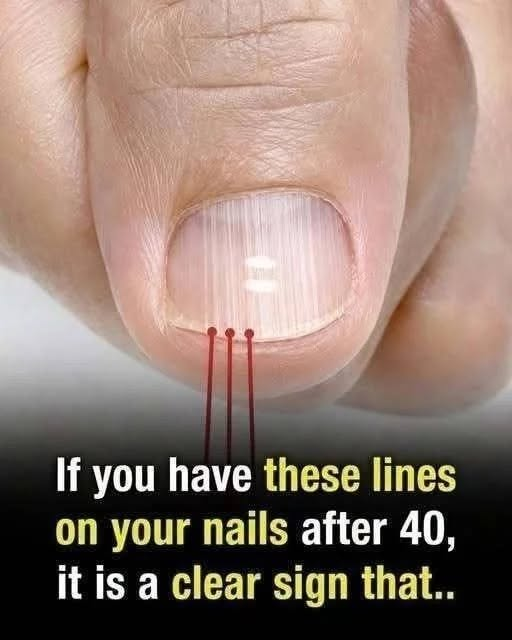
Have you ever looked closely at your fingernails and noticed thin lines running from the base of your nail toward the tip? Perhaps they were barely noticeable when you were younger, but now they seem more visible, deeper, or more pronounced.
For many people, these changes become noticeable after the age of 40. Some assume they are simply part of getting older, while others worry that the lines could indicate nutritional deficiencies or an underlying health problem.
But what do these lines actually mean?
Your fingernails can sometimes provide clues about your general health. Changes in their color, texture, thickness, and growth patterns may occasionally be associated with nutritional problems, medical conditions, infections, or physical injuries.
However, not every unusual nail marking is a warning sign. Vertical ridges, in particular, are extremely common and often become more noticeable with age.
Understanding the different types of nail lines can help you distinguish ordinary changes from signs that deserve medical attention.
1. Vertical Lines on Fingernails: A Common Change After 40
One of the most common nail changes is the appearance of vertical ridges.
These are thin lines that run lengthwise, starting near the cuticle and extending toward the tip of the nail.
They may appear on one nail or several nails and can become more noticeable over time.
For many adults, vertical ridges are a normal part of aging.
As we grow older, changes in nail growth and the structure of the nail plate can make these ridges more visible.
You may notice that your nails:
Have fine lines running from bottom to top.
Feel slightly rough when touched.
Look less smooth than they did years ago.
Become more brittle.
Split or break more easily.
In most cases, these changes are harmless.
However, if the ridges appear suddenly, become unusually pronounced, or occur alongside other symptoms, it may be worth discussing them with a healthcare professional.
2. Dryness and Dehydration Can Make Nail Ridges More Noticeable
Another possible contributor to changes in nail appearance is dryness.
Nails are made primarily of keratin, a structural protein that also forms part of your hair and the outer layer of your skin.
Repeated exposure to water, detergents, cleaning products, and harsh chemicals can affect the nail plate and surrounding skin.
As a result, nails may become dry, brittle, and more likely to develop visible surface irregularities.
Certain everyday habits can make this worse:
Washing your hands frequently without moisturizing afterward.
Using strong cleaning products without gloves.
Regularly applying and removing nail polish.
Using acetone-based nail polish removers frequently.
Picking or scraping the nail surface.
Exposing your hands to cold, dry weather.
Keeping your nails and surrounding skin moisturized may help reduce brittleness.
A simple hand cream or cuticle moisturizer can be useful, particularly after washing your hands.
3. Nutritional Deficiencies May Sometimes Affect Nail Appearance