Small white spots are often caused by minor trauma to the nail matrix, the area responsible for producing the nail plate.
For example, accidentally hitting your fingernail or experiencing pressure during a manicure may produce a small white mark.
This condition is known as leukonychia.
The spots generally move toward the fingertip as the nail grows.
Contrary to a popular belief, small white spots do not automatically indicate calcium deficiency.
Other types of white nail changes can have different causes.
For example, widespread whitening may sometimes be associated with certain medical conditions, while superficial white patches can occur with fungal infections.
If the entire nail changes color or several nails develop unusual white markings, a medical assessment can help identify the cause.
7. Brittle Nails May Be Associated With Thyroid Problems
If your fingernails have become unusually fragile, split frequently, or seem to break with very little pressure, it may be worth considering several possible causes.
One possibility is a thyroid disorder.
The thyroid gland produces hormones that help regulate metabolism and influence many bodily functions.
When thyroid hormone levels become abnormal, changes in skin, hair, and nails may occur.
Hypothyroidism, for example, can sometimes be associated with dry skin, brittle nails, and hair changes.
Other possible symptoms include:
Persistent tiredness.
Increased sensitivity to cold.
Constipation.
Dry skin.
Unexplained weight gain.
Slower-than-usual movements.
These symptoms are not specific to thyroid disease.
However, if several occur together, discussing thyroid testing with a healthcare professional may be appropriate.
8. Nail Fungus Can Change the Appearance of Your Fingernails
Fungal nail infections are another common reason for changes in nail appearance.
Although they are more frequently seen in toenails, fingernails can also be affected.
A fungal infection may cause nails to become:
Yellowish or whitish.
Thickened.
Brittle.
Crumbly.
Distorted in shape.
Separated from the underlying nail bed.
Sometimes, debris accumulates beneath the nail.
Fungal infections usually develop gradually and may spread to other nails.
Risk factors include nail injuries, frequent exposure to moisture, certain skin conditions, and a weakened immune system.
Not every thick or discolored nail is caused by fungus.
A healthcare professional may examine a nail sample before recommending antifungal treatment.
This is important because treating the wrong condition with antifungal medication will not solve the underlying problem.
9. Can Stress Affect Your Fingernails?
Stress can influence the body in several ways, including changes in sleep, eating habits, and general health.
Significant physical stress, such as a serious illness or major medical event, can temporarily interrupt nail growth.
This may lead to horizontal grooves known as Beau’s lines.
Emotional stress may also indirectly affect nail health.
For example, some people develop habits such as:
Nail biting.
Picking at the cuticles.
Scratching the nail surface.
Repeatedly damaging the skin around the nails.
These behaviors can cause nail damage and sometimes increase the risk of infection.
Maintaining healthy routines, eating adequately, and avoiding repeated nail trauma can help protect nail health.
10. What Your Fingernails May Reveal About Circulation
Changes in nail appearance can occasionally be associated with circulation problems.
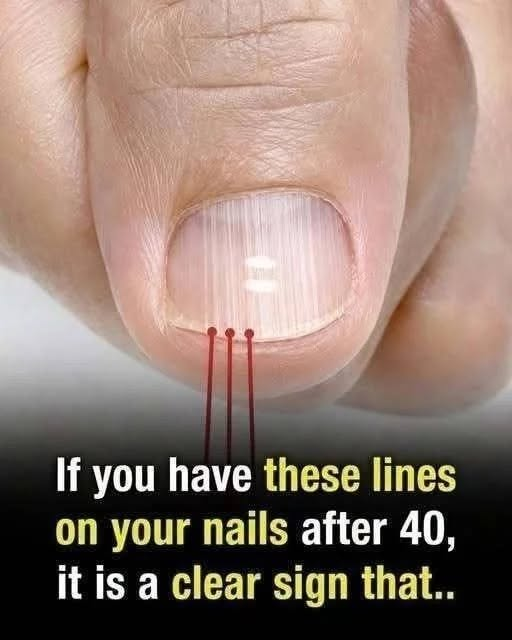
One example is clubbing, a condition in which the fingertips become enlarged and the nails curve more noticeably around the fingertips.
Clubbing can be associated with certain lung, heart, liver, and digestive conditions.
Another change is the appearance of unusually pale nail beds, which may occur in people with anemia or other medical conditions.
However, nail color and shape are influenced by many factors.
You cannot reliably diagnose poor circulation or heart disease by examining fingernails alone.
If nail changes occur alongside shortness of breath, chest discomfort, unexplained fatigue, or other concerning symptoms, seek medical advice.
11. How to Keep Your Fingernails Healthy After 40
Although some nail changes are part of normal aging, good nail care can help maintain stronger, healthier nails.
Here are several practical habits worth adopting.
Keep your nails moisturized.
Apply hand cream regularly, paying attention to the nails and surrounding cuticles.
Avoid excessive exposure to chemicals.
Wear protective gloves when washing dishes or using household cleaning products.
Trim your nails carefully.
Use clean nail clippers and avoid cutting too deeply into the corners.
Do not aggressively buff ridges.
Excessive filing can make the nail plate thinner and more vulnerable to damage.
Eat a balanced diet.
Include adequate protein, iron-containing foods, vegetables, fruits, and other nutrient-rich ingredients.
Avoid biting your nails.
This habit can damage the nail surface and surrounding skin.
Give your nails breaks from harsh treatments.
Frequent artificial nail applications, aggressive removal, and repeated use of strong chemicals can contribute to nail damage.
Protect your hands from excessive moisture.
Dry your hands properly after washing and avoid leaving your nails wet for extended periods.
12. When Should You See a Doctor About Nail Lines?