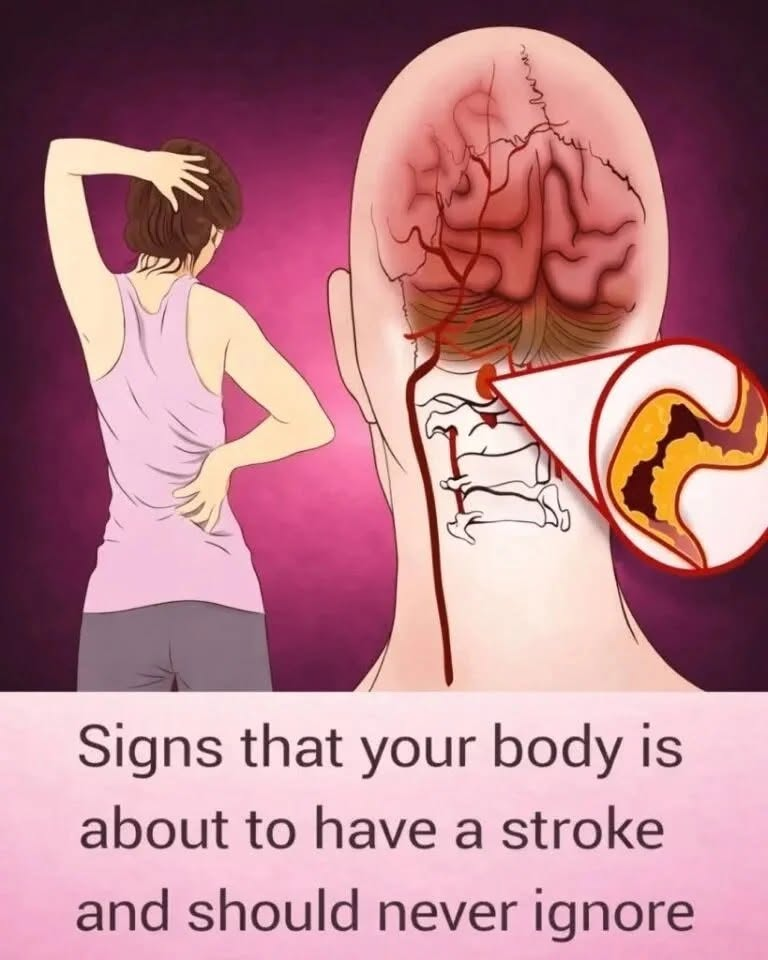
Some people suddenly lose vision in one eye, while others experience difficulty seeing objects on one side.
In certain cases, a person may develop double vision or blurred vision.
These symptoms can be particularly dangerous because they may affect the person’s ability to walk, drive, or recognize objects around them.
Possible visual symptoms include:
Sudden loss of vision in one eye.
Blurred vision.
Double vision.
Difficulty seeing objects on one side.
Sudden loss of part of the visual field.
A sudden visual disturbance should never be dismissed simply because there is no pain.
Vision changes can have several possible causes, including conditions unrelated to stroke. However, sudden unexplained changes require urgent medical assessment.
If vision problems appear together with weakness, dizziness, or speech difficulties, the possibility of a stroke becomes especially concerning.
4. Sudden Severe Headache Unlike Anything Before
A sudden, extremely severe headache can sometimes indicate a serious neurological emergency.
One particularly dangerous type of stroke is a hemorrhagic stroke, which occurs when a blood vessel inside or around the brain ruptures and causes bleeding.
Some people experiencing bleeding in the brain describe the headache as the worst headache they have ever experienced.
It may reach maximum intensity very quickly.
Additional symptoms can include:
Vomiting.
Neck stiffness.
Sensitivity to light.
Confusion.
Loss of consciousness.
Seizures.
Not every stroke causes a headache, and most headaches are not strokes.
However, a sudden, explosive headache that reaches maximum intensity within seconds or minutes requires emergency medical attention.
Never attempt to treat an unusually severe, sudden headache as an ordinary headache without considering the possibility of a serious underlying condition.
5. Sudden Dizziness, Loss of Balance, or Difficulty Walking
Another warning sign that people sometimes overlook is a sudden loss of balance or coordination.
A stroke affecting certain areas of the brain can interfere with the body’s ability to maintain posture and control movement.
Someone may suddenly feel as though the room is spinning, struggle to stand upright, or find it difficult to walk in a straight line.
They may also experience unusual clumsiness or coordination problems.
Possible symptoms include:
Sudden dizziness.
Difficulty standing.
Loss of coordination.
Unsteady walking.
Sudden problems with balance.
Difficulty controlling movements.
These symptoms can sometimes occur during strokes affecting the back part of the brain.
This is important because some people mistakenly believe that a stroke must always cause facial drooping or arm weakness.
That is not true.
A stroke can sometimes present primarily with dizziness, severe imbalance, vision problems, or coordination difficulties.
If these symptoms appear suddenly, especially alongside other neurological changes, emergency assessment is essential.
6. Sudden Confusion or Difficulty Understanding What Is Happening
A stroke can also affect thinking, awareness, and the ability to process information.
Someone who was perfectly alert moments earlier may suddenly appear confused or disoriented.
They might struggle to understand familiar instructions, recognize what is happening around them, or respond appropriately to questions.
In some cases, they may seem unusually sleepy or have difficulty staying alert.
Family members may notice that the person’s behavior has changed dramatically.
Possible symptoms include:
Sudden confusion.
Difficulty understanding conversations.
Unusual disorientation.
Problems recognizing familiar information.
Sudden difficulty concentrating.
Changes in awareness.
Confusion has many possible causes, including infections, medication effects, low blood sugar, and other medical emergencies.
However, sudden unexplained confusion should never be ignored, particularly when it occurs alongside speech problems, weakness, or balance difficulties.
7. Temporary Stroke-Like Symptoms That Suddenly Disappear
Perhaps one of the most dangerous mistakes people make is ignoring symptoms that disappear after a few minutes.
A person might suddenly experience weakness in one arm, difficulty speaking, or temporary vision loss.
Then, after several minutes, everything appears normal again.
They may decide that the problem was caused by tiredness, stress, dehydration, or sleeping in an uncomfortable position.
However, these symptoms could indicate a transient ischemic attack, commonly called a TIA.
A TIA occurs when blood flow to part of the brain is temporarily interrupted.
Its symptoms resemble those of a stroke but resolve, usually within minutes or hours.
Although the symptoms disappear, a TIA is not harmless.
It can be an important warning that a person is at increased risk of experiencing a future stroke.
Anyone experiencing sudden stroke-like symptoms needs immediate medical assessment, even if they completely recover.
Never wait for symptoms to return before seeking help.